
Actress Parveen Babi- A Biography
Introduction
Parveen Babi remains remembered as a trailblazer. She brought glamour, modernity, confidence, and individuality to Hindi cinema. Decades after her greatest successes, her name continues to evoke the distinctive spirit of Bollywood’s golden and transformative era.
Parveen Babi remains one of the most memorable actresses of Hindi cinema. She became a major star during the 1970s and early 1980s. Her modern style, confident screen presence, and natural acting made her different from many actresses of her generation. She appeared in several successful films and worked with some of the biggest actors and directors of her time.
Get Coffee Mug! Click on Image

Unlike the traditional image of the Hindi film heroine, Parveen Babi often represented a new kind of Indian woman. Her characters could be independent, confident, educated, and modern. She also became known for her fashionable appearance and Western-inspired style. Her popularity went beyond films. She became a major cultural figure whose image influenced fashion and popular cinema.
Watch shows on mobile! Click at photo

Parveen Babi’s life, however, was not only about fame and success. Behind her glamorous public image was a complicated personal journey. Her later years were marked by serious personal difficulties and isolation. Her story therefore combines extraordinary professional success with a deeply troubled private life.
Early Life and Background
Parveen Babi was born on April 4, 1954, in Junagadh, Gujarat. She came from a Gujarati Muslim family. Her father, Vali Mohammed Khan Babi, worked as an administrator, while her mother, Jamia Babi, looked after the family.
Parveen grew up in an educated environment. She completed her schooling in Junagadh and later studied at St. Xavier’s College in Ahmedabad. During her college years, she developed an interest in acting and modelling.
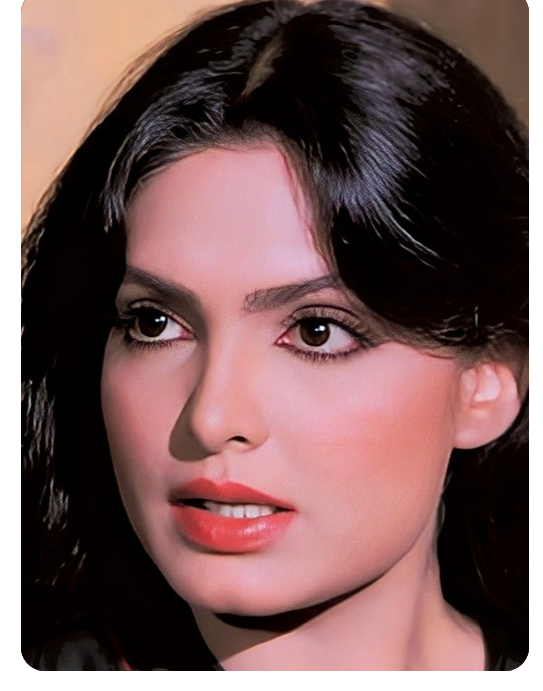
Her journey into films was not planned in the traditional way. She first attracted attention as a model. Her striking appearance and confident personality helped her receive modelling opportunities. The modelling world gave her a public profile and eventually opened the door to Hindi cinema.
She entered films at a time when the industry was changing rapidly. The 1970s brought new stories, new styles, and new kinds of heroes and heroines. Parveen’s appearance suited this changing atmosphere perfectly.
Parveen Babi: Entry into Bollywood
Parveen Babi made her film debut with Charitra in 1973. The film did not become a major commercial success, but it introduced her to the Hindi film industry.
Her breakthrough came soon afterward. She began receiving offers from leading filmmakers and appeared opposite some of the biggest stars of the period. Her career developed quickly because she had a combination of beauty, confidence, and screen presence.
The 1970s were an important period for Hindi cinema. The angry-young-man image became popular, urban stories gained attention, and audiences increasingly accepted modern female characters. Parveen Babi fitted naturally into this new cinema.
She was not limited to one type of role. She played romantic heroines, working women, sophisticated urban characters, and women caught in emotional conflicts. Her performances often relied on simplicity rather than excessive theatricality.
Rise to Stardom
Parveen Babi became one of the leading actresses of the 1970s. Films such as Majboor, Deewaar, Amar Akbar Anthony, Suhaag, The Burning Train, and Namak Halaal helped establish her as a major star.
Her collaboration with Amitabh Bachchan became particularly important. The two appeared together in several successful films and became one of the popular screen pairs of the era.
In Deewaar (1975), Parveen played Anita. The film was built around a powerful conflict between two brothers, but her character added an important emotional and romantic dimension to the story. Her performance was restrained and memorable.
Amar Akbar Anthony (1977) displayed her ability to work within a large commercial entertainer. The film became a major success and remains one of the best-known Hindi films of its period.
She also appeared in Suhaag (1979), another successful film featuring Amitabh Bachchan and Shashi Kapoor. Parveen’s screen image had by then become firmly associated with glamour, modernity, and confidence.
A New Image of the Hindi Film Heroine
One of Parveen Babi’s greatest contributions was the way she changed the visual image of the Hindi film heroine.
Earlier generations of actresses were often presented through traditional Indian costumes and conventional romantic roles. Parveen brought something different. She appeared comfortable in Western clothing, modern hairstyles, and urban settings. Her style reflected the changing aspirations of India’s growing middle class.
She could wear jeans, dresses, skirts, and contemporary outfits without losing her identity as a Hindi film heroine. Her fashion choices became widely noticed.
Her screen personality was also important. She often looked confident rather than shy. Her characters could speak directly and express their opinions. This made her particularly appealing to younger audiences.
Many later actresses benefited from the path opened by stars such as Parveen Babi. She helped demonstrate that a female star could combine glamour with a modern and independent screen personality.
Important Films and Performances
Parveen Babi’s filmography includes several notable commercial and critically remembered films.
Deewaar remains one of her most important works. The film became a landmark of 1970s Hindi cinema. Her role as Anita was relatively small compared with the central conflict, but she brought warmth and naturalness to the character.
In Amar Akbar Anthony, she played Jenny. The film combined comedy, romance, action, music, and family drama. Parveen fitted easily into its entertaining style.
Suhaag gave her another opportunity to work in a large-scale commercial film. Her pairing with Amitabh Bachchan was popular with audiences.
She also appeared in Kaala Patthar (1979), directed by Yash Chopra. The film featured a strong ensemble cast and dealt with the dangerous lives of coal miners. Parveen’s presence added another emotional layer to the story.
In The Burning Train (1980), she became part of an ambitious disaster film. The movie brought together many major stars and remains remembered for its large cast and spectacular premise.
Namak Halaal (1982) further demonstrated her popularity. The film became a major commercial success and combined comedy, romance, music, and drama.
Her career also included films such as Suhaag, Suhag, Aahuti, Kala Sona, Jaani Dost, and Rang Birangi. Although not every film achieved the same level of success, her presence remained valuable to filmmakers.
Working with Amitabh Bachchan
Parveen Babi’s professional association with Amitabh Bachchan became one of the defining features of her career.
Their pairing worked particularly well because Bachchan represented the intense and powerful hero of the 1970s, while Parveen brought sophistication and modern glamour to the female lead.
They appeared together in several successful films, including Deewaar, Amar Akbar Anthony, Suhaag, and Kaala Patthar. Their chemistry became popular with audiences.
Parveen was also able to hold her own in films dominated by powerful male characters. This was an important achievement because mainstream Hindi cinema during that period often focused heavily on its male stars.
International Recognition and Cultural Influence
Parveen Babi achieved a level of recognition that went beyond the Indian film industry. She became one of the first Indian actresses to appear on the cover of Time magazine. This reflected the growing international interest in Indian cinema and Indian popular culture.
Her appearance and fashion sense also attracted attention outside India. She represented a modern, urban image of Indian womanhood at a time when India’s cultural identity was changing.
Her influence can still be seen in discussions about Bollywood fashion. She demonstrated that a Hindi film actress could become a style icon through confidence, clothing, hairstyles, and personality.
Personal Life
Parveen Babi’s personal life attracted considerable media attention. She had relationships with several well-known personalities, including filmmaker Mahesh Bhatt.
Her relationship with Bhatt later became the subject of public discussion and inspired aspects of his later filmmaking. However, much of Parveen’s private life was complex, and separating confirmed facts from media speculation can be difficult.
During the later part of her life, she experienced serious personal difficulties. She became increasingly withdrawn from public life and spent periods outside India.
Reports about her mental and physical health became part of the public narrative surrounding her. It is important, however, to discuss such matters with sensitivity. Her later years should not be reduced simply to the difficulties she faced. She was first and foremost an accomplished actress who had made a significant contribution to Indian cinema.
Withdrawal from Films
By the early 1980s, Parveen Babi had begun reducing her film appearances. At the height of her career, she had been one of the most sought-after actresses in Bollywood. Her decision to step away from films therefore surprised many people.
The reasons behind her withdrawal were connected to her personal circumstances and changing priorities. She eventually spent considerable time away from India.
Her absence created an aura of mystery around her. The actress who had once appeared constantly on cinema screens was suddenly living a much quieter life.
This contrast between her glamorous career and later isolation contributed to the enduring fascination surrounding her.
Final Years and Death
Parveen Babi died on January 20, 2005, in Mumbai. She was 50 years old.
Her death shocked the Hindi film industry and the public. The circumstances surrounding her final years received considerable media attention. Yet her passing also encouraged renewed interest in her film career.
Many people remembered the actress she had been at the height of her popularity. They remembered her performances, her style, and her distinctive presence on screen.
Her death marked the end of a life that had experienced extraordinary fame at a relatively young age.
Legacy
Parveen Babi’s legacy remains strong. She was more than a glamorous actress. She represented a major change in Hindi cinema.
She helped introduce a more modern visual language for female stars. Her characters often belonged to an urban world. Her clothing, hairstyles, and confidence influenced popular culture. Her natural acting style also helped move Hindi cinema away from some of the more exaggerated performance traditions of earlier decades.
Her films continue to attract audiences through television, streaming platforms, and film retrospectives. Younger viewers can still recognize the qualities that made her special.
Parveen also remains an important figure in discussions about the history of Bollywood fashion. Her appearance in the 1970s was remarkably modern, and many elements of her style continue to inspire fashion designers and performers.
Conclusion
Parveen Babi’s journey is one of the most fascinating stories in Hindi cinema. She entered the industry as a young model and quickly became one of Bollywood’s biggest female stars. Her beauty attracted attention, but her success depended on much more than appearance. She possessed confidence, screen presence, and an ability to fit naturally into the changing world of Indian cinema.
Her work with leading actors, especially Amitabh Bachchan, produced several memorable films. Movies such as Deewaar, Amar Akbar Anthony, Suhaag, Kaala Patthar, The Burning Train, and Namak Halaal remain important parts of her film legacy.
At the same time, her later life was marked by difficulties and withdrawal from the public eye. Her story reminds us that fame does not always reveal the complete life of a person.