
Actress Babita-Her own story
Indian cinema has produced many actresses who became famous for their beauty, talent, and screen presence. Among them, Babita Kapoor, popularly known simply as Babita, holds a special place. She was one of the most graceful actresses of Hindi cinema during the late 1960s and early 1970s. Her career was relatively short, but she worked with several leading actors and appeared in many successful and memorable films.
Get Coffee Mug! Click on Image

Babita Kapoor was born on 20 April 1948 in Bombay, now Mumbai. She came from a family connected with the film industry. Her father was Hari Shivdasani, a well-known character actor who worked in Hindi films. Her family background gave her an early connection with cinema, but her own success came through her screen personality, beauty, and ability to adapt to different roles.
Early Life and Family Background
Babita grew up during a period when Hindi cinema was changing rapidly. The 1950s had been dominated by stars such as Nargis, Madhubala, Meena Kumari, Nutan, and Waheeda Rehman. By the late 1960s, a new generation of actresses was entering the industry. Babita became part of this new wave.
Her father, Hari Shivdasani, had already established himself as an actor. He appeared in several important Hindi films and was known for supporting and character roles. Through him, Babita was familiar with the world of filmmaking from an early age.
Enjoy your favorite shows with these wireless TV headphones 😊
Babita was also related to the influential Kapoor family through her marriage. Her entry into the film industry was therefore followed with considerable interest. Yet she did not become popular simply because of her family connections. She developed her own identity through her performances and her distinctive appearance.
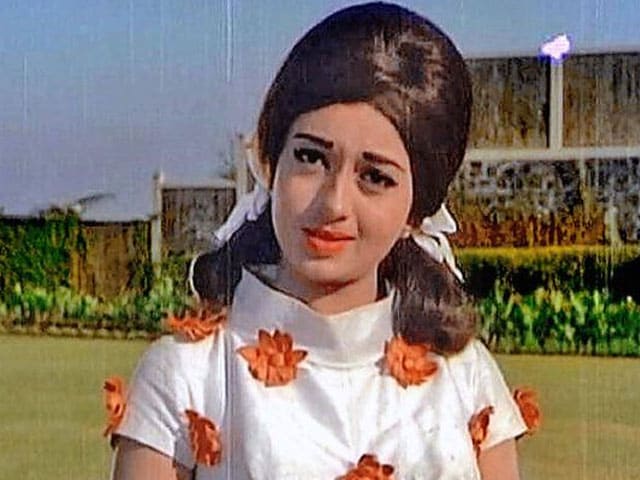
Entry into Hindi Cinema
Babita made her acting debut with Dus Lakh in 1966. The film introduced audiences to a young actress who had a fresh and attractive screen presence. Her career soon gathered momentum.
She appeared in Raaz in 1967, opposite Rajesh Khanna. The film was an important step in her career because Rajesh Khanna was becoming one of the most popular young actors of Hindi cinema. Working with him helped Babita gain wider recognition.
Her beauty was one of her most noticeable qualities. However, she also possessed a natural ease before the camera. She could play romantic, emotional, and light-hearted characters without appearing uncomfortable.
During this period, Hindi cinema was developing a new visual style. Colour films were becoming increasingly popular. Fashion was changing. Young actresses were being presented in modern costumes and contemporary settings. Babita fitted naturally into this changing cinematic environment.
Important Films and Career Growth
Babita worked with several leading actors during her career. She appeared opposite stars such as Shammi Kapoor, Dharmendra, Rajesh Khanna, Jeetendra, Shashi Kapoor, and Randhir Kapoor.
One of her memorable films was Haseena Maan Jayegi (1968), in which she starred opposite Shashi Kapoor and Shammi Kapoor. The film combined romance, comedy, music, and family entertainment. Babita’s charming presence suited the film’s lively atmosphere.
Another notable film was Kismat (1968), where she appeared with Biswajeet. The film gave her another opportunity to display her abilities in a romantic role.
She also acted in Anjaana (1969), opposite Rajendra Kumar and Babita. The film was part of the romantic cinema that was extremely popular with audiences at the time.
Her filmography also included Doli (1969), Ek Shriman Ek Shrimati (1969), Kab? Kyoon? Aur Kahan? (1970), Kal Aaj Aur Kal (1971), and Jeet (1972).
These films demonstrated her versatility within the commercial cinema of the period. She could fit comfortably into romantic dramas, family stories, comedies, and films built around music.
Babita and Rajesh Khanna
Babita shared the screen with Rajesh Khanna during an important phase of his career. Khanna was rapidly becoming a major star, and actresses opposite him often received considerable attention.
Their pairing worked well because both had a youthful and attractive screen presence. Babita brought elegance and softness to romantic scenes, while Khanna’s performances carried the emotional intensity that made him extremely popular.
Their films reflected the changing expectations of Hindi-film audiences. Romance was becoming an increasingly important part of mainstream cinema. Songs, colourful locations, stylish costumes, and emotional storytelling became major attractions.
Babita understood this style well. She did not need exaggerated performances to attract attention. Her restrained expressions and graceful manner were often enough to create an impression.
A Distinctive Style
Babita’s greatest strength was perhaps her screen elegance. She belonged to a generation of actresses who helped establish new ideas of fashion and femininity in Hindi cinema.
Her hairstyles, clothing, makeup, and overall presentation became part of her public image. She often appeared in modern Western-style clothing as well as traditional Indian costumes. This reflected the changing urban culture of India during the late 1960s and early 1970s.
She also had a distinctive face that photographed well. The camera captured her expressions naturally, which made her particularly effective in romantic sequences.
Her performances were usually subtle rather than dramatic. She was not primarily known for intense tragic roles. Instead, she became associated with charm, romance, sophistication, and youthful energy.
Marriage to Randhir Kapoor
Babita’s personal life became closely connected with the Kapoor family when she married actor Randhir Kapoor in 1971.
Randhir Kapoor was the eldest son of Raj Kapoor and belonged to one of India’s most influential film families. The marriage attracted considerable public attention.
Babita and Randhir Kapoor had two daughters, Karisma Kapoor and Kareena Kapoor Khan. Both daughters later became major actresses in Hindi cinema.
Karisma Kapoor became one of the leading stars of the 1990s. She earned recognition for films such as Raja Hindustani, Dil To Pagal Hai, and Fiza.
Kareena Kapoor Khan went on to build an equally successful career. She became known for her work in films such as Jab We Met, Chameli, Omkara, 3 Idiots, and Talaash.
Thus, Babita became an important link between two generations of the Kapoor family’s cinematic history.
Leaving the Film Industry
Babita’s acting career was relatively brief. After her marriage, her appearances on the big screen became increasingly limited. She eventually stepped away from acting.
Her decision was significant because she had established herself as a successful actress in a short period. Unlike some performers who continued working for decades, Babita chose to concentrate on her family life.
Her retirement also added a certain mystery to her public image. She did not remain constantly visible in the entertainment industry. As a result, audiences continued to remember her primarily through her films.
In retrospect, her short career demonstrates that longevity is not the only measure of a film star’s impact. Some performers leave a lasting impression despite appearing in a comparatively small number of films.
Influence on Her Daughters
Babita’s influence on Karisma and Kareena is an important part of her legacy.
When Karisma entered films in the early 1990s, she became one of the most successful actresses of her generation. Her success was followed by Kareena, who emerged as one of the most respected and commercially successful actresses of the 2000s and 2010s.
Babita understood the challenges of the film industry because she had experienced them herself. Her knowledge of cinema and her connection with the Kapoor family gave her daughters an important understanding of the profession.
At the same time, both daughters created their own identities. Karisma developed a distinctive career in commercial Hindi cinema, while Kareena successfully moved between mainstream entertainment and more performance-oriented films.
Their achievements ensured that Babita’s name remained connected with Hindi cinema even after her own retirement.
Contribution to Hindi Cinema
Babita’s contribution should be understood in the context of the era in which she worked. She was not an actress who remained on screen for several decades. Instead, she represented a particular moment in Hindi cinema.
The late 1960s and early 1970s brought a new sense of style to Bollywood. Young actresses were increasingly presented as modern, independent, fashionable, and confident. Babita represented this transformation beautifully.
Her performances may not have included the dramatic intensity associated with actresses such as Meena Kumari or Nutan, but that was not her primary screen identity. She excelled in films that required elegance, charm, romantic appeal, and a contemporary personality.
Her collaborations with leading actors also helped establish her position among the popular actresses of her generation.
Remembering Babita
Today, Babita is remembered not only as a former Bollywood actress but also as a member of one of India’s most famous film families. Her own career remains an important part of Hindi cinema history.
Her films continue to attract viewers interested in the classic period of Bollywood. Old songs, colourful costumes, romantic stories, and the presence of stars from the golden era have helped preserve the appeal of her movies.
Babita’s journey is also interesting because it connects several generations of Indian cinema. Her father worked as an actor in an earlier era. She became a star during the late 1960s and early 1970s. Her daughters later became major stars in the modern era.
Few families have such a continuous connection with Hindi cinema.
Conclusion
Babita remains a memorable figure in the history of Hindi cinema. She entered films during a period of major change and quickly established herself as a stylish and graceful leading actress. Her beauty attracted attention, but her natural screen presence helped her maintain a place among the popular actresses of her generation.
Her film career was short, yet it included collaborations with several major stars and appearances in films that remain familiar to lovers of classic Bollywood. Her marriage to Randhir Kapoor connected her with the legendary Kapoor family, while her daughters Karisma and Kareena carried the family’s cinematic legacy into new generations.
Babita’s story therefore extends beyond her own filmography. She represents a fascinating period in Indian cinema when traditional romance began meeting modern style. Her graceful personality, memorable screen appearances, and connection with two generations of successful actresses have ensured that her name continues to be remembered.
She may have left the film industry relatively early, but she never disappeared from the history of Bollywood. Babita remains a symbol of the elegance, glamour, and youthful charm of late-1960s and early-1970s Hindi cinema.